One largely unexpected consequence of America’s successful operation against bin Laden appears to be serious degradation in our ability to work with Pakistan–at least in the near future. Pakistani government faces internal questions about its ability to secure sovereignty in the face of a blatant breach of its borders with the night time raid. It faces questions from Congress and from the international community regarding the honesty of its counter-terrorism efforts, given its claimed ignorance that bin Laden lived less than an hour away from the capital. It seems reasonable for Pakistan to respond to questions from its internal critics by publicly speaking against the U.S. and perhaps even publicly forbidding the U.S. from executing drone operations within its territory. It also seems reasonable for our allies and Congress to question why we would be working in any way with such an unreliable ally. Certainly Pakistan should not expect Congress to approve any more resources flowing its way in the near future. And it’s hard to imagine joint military exercises while American soldiers still hold the suspicion that Pakistani military and intelligence agencies were withholding information.
Author: Michael Belinsky
Quote of the day
“They addressed one another as ‘stakeholders’ in public, but the stakes they wielded usually seemed destined for someone else’s back.”
David Dunlap, “World Trade Center Complex Is Rising Rapidly,” The New York Times, Sept. 3, 2010.
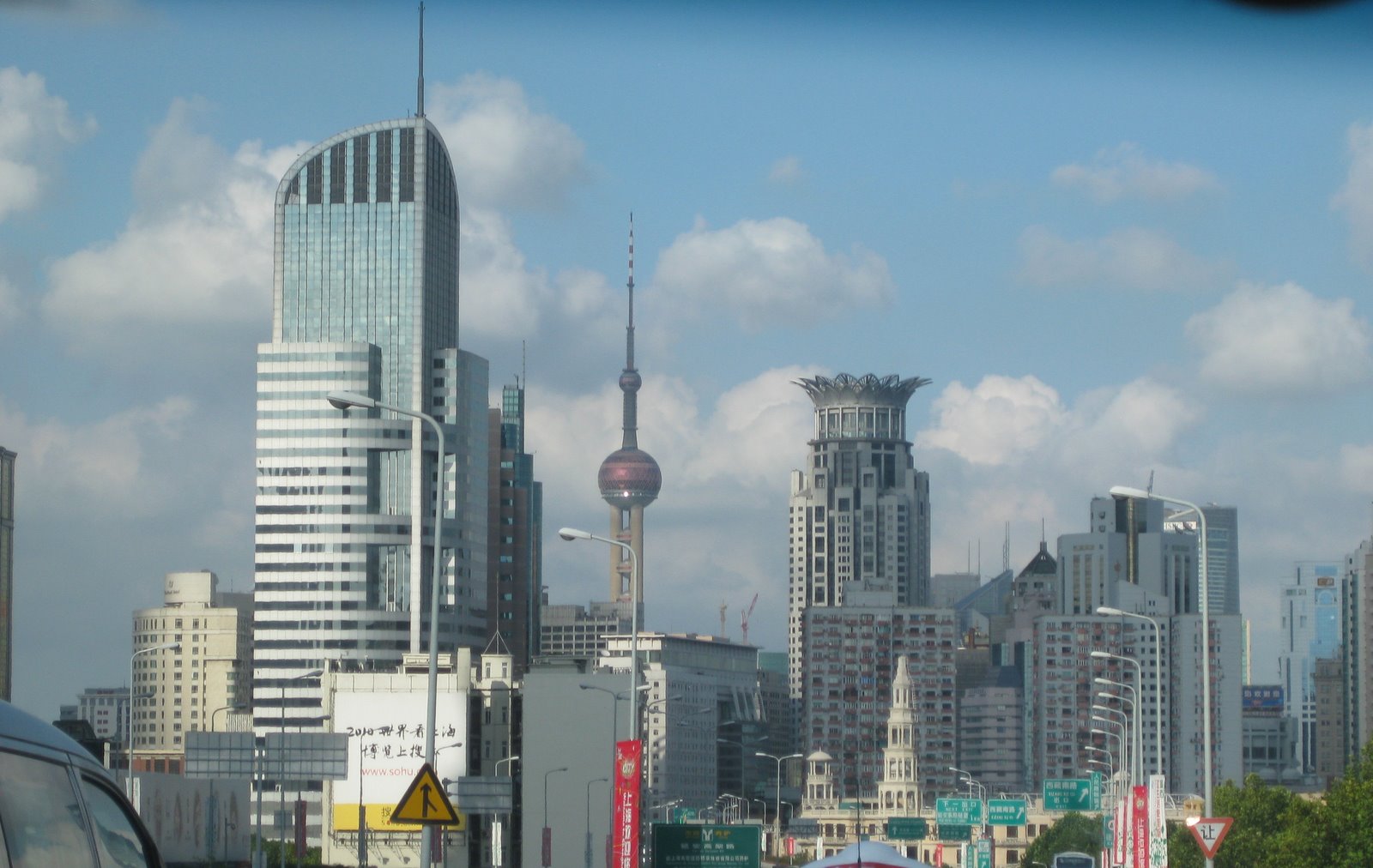
Shanghai’s incredible skyline
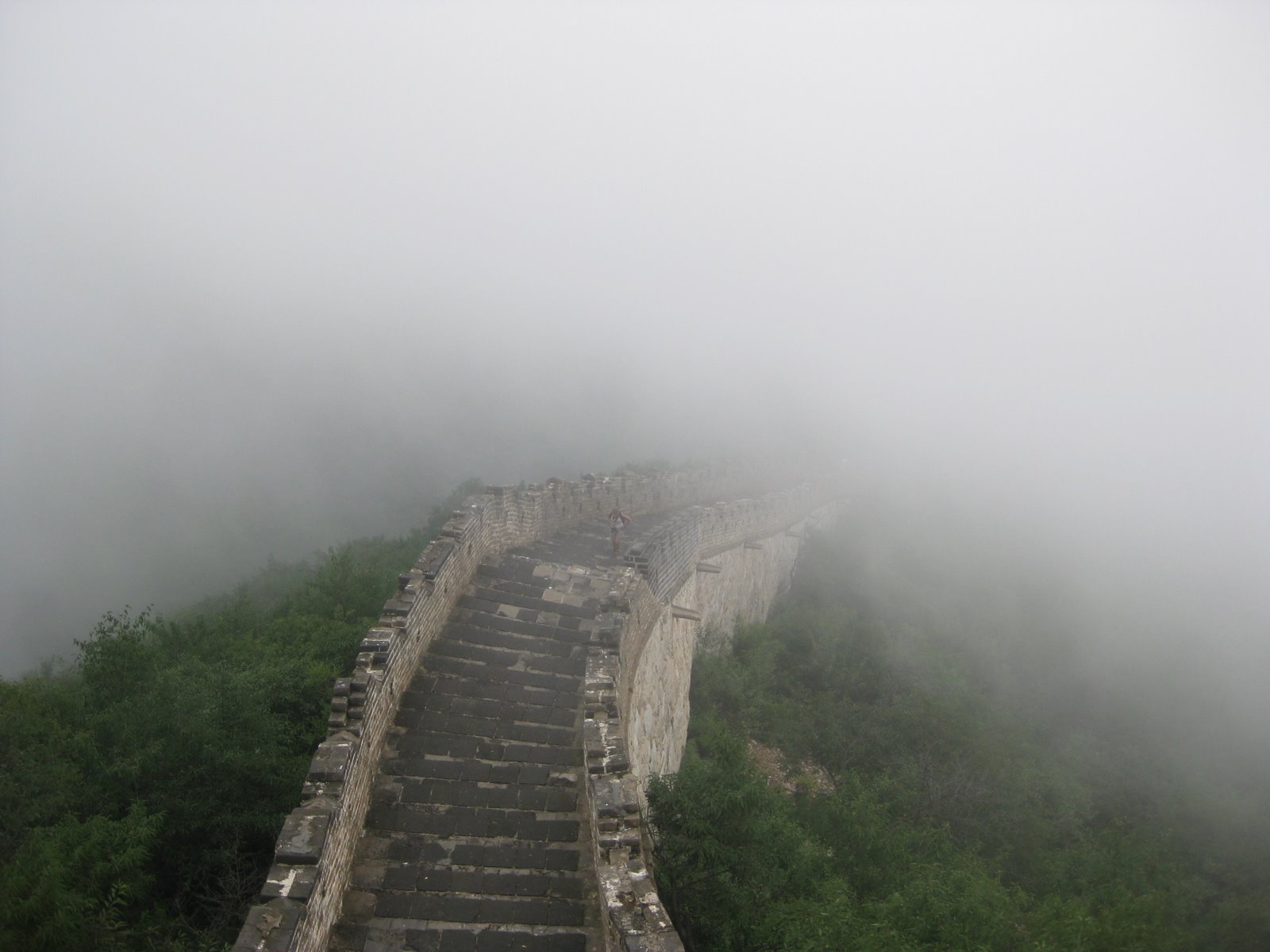
The Great Wall of China
PTA
"Do you know what an IED is? And I say yea. Those three letters were as familiar to me as PTA used to be." – Interview, NPR Fresh Air, 8/17/2010.
A subway ride in Beijing
I rode the subway today back to the Westin hotel from Beijing's Capital Museum. The subway was fairly empty by Beijing standards. Most seats were taken and some people were standing. At one stop some seats empty out and a family of four gets on, a grandmother, grandfather, mother, and son. They head for an empty seat. The child, a plump five or six year old, plops on the seat ahead of his grandmother. His mother hurriedly tries to shush him out of the seat. His grandmother stands closet to the seat, but the child is bewildered. The mother starts talking sternly to her son. People are starting to stare. Such disrespect of one's elders in simply unacceptable here. Then again, he is only a child, does he know better? He squirms and pushes back against his mother. One of the men sitting across from this situation looks up at me. Sheepishly, he smiles. The subway car is observing a middle class family losing face, and there is a white man aboard.
Haggling in developing countries
I am in a developing country and a guy tries to sell me something. It's usually a drink, a watch, sunglasses, or something similar. I get quoted an obviously-inflated price. The guy wants to get as much money from me as possible. He gauges how much I would spend, based on my skin color, my clothes, the way I handle myself.
Right shoulder up
A great article about Japan.
"Three years ago, I saw a television program about a new breed of youngster: the nonconsumer. Japanese in their late teens and early 20s, it said, did not have cars. They didn’t drink alcohol. They didn’t spend Christmas Eve with their boyfriends or girlfriends at fancy hotels downtown the way earlier generations did. I have taught many students who fit this mold. They work hard at part-time jobs, spend hours at McDonald’s sipping cheap coffee, eat fast food lunches at Yoshinoya. They save their money for the future."
Sun Tzu and a watch
I enjoyed browsing the Beijing Antique Market at Panjiayuan Street today. I made two great purchases, a knockoff watch and a copy of Sun Tsu's "Art of War" printed on a wooden scroll.
Jakarta
Jakarta appears more developed than Saigon, and certainly more
developed than Thailand and Cambodia. Where Saigon has endless
streams of motorcycles, or motos, floating down its well-paved
streets, cars sit on Jakarta's roads, stuck in an eternal traffic.
Jakarta's malls have both real and knockoff products, which is a
welcome change from Thailand and Cambodia. In those, although real
branded clothes, watches, and electronics exist, they are much harder
to find and most tourists stumble only on the knockoff Gucci, Prada,
and iPhones. The largest and nicest of Jakarta's malls has only real
products, and they are sold for only real prices. In some cases there
is a 10-20% discount off the price I would see in the US. But sales
and discounts seemed rare, or perhaps this was not the season for
sales.
Jakarta has a noticeably smaller contingent of white people — both
expats and tourists. Every country in the Mekong delta, it seemed,
was swarming with tourists. Additional evidence of this was the
vibrant tourist-based economy that I saw in Thailand, Cambodia, and
Vietnam. In Thailand there is of course the famous red light
district, which serves white tourists and, according to my depressing
book on sex slavery, many Japanese men. In each of those countries,
motos and tuk tuks stood ready to ferry tourists to any location for a
price well above the one they would charge locals. Streets in Phnom
Penh were lined with stalls of food for tourists; further from the
touristy roads, much cheaper noodle stalls catered to locals.
Jakarta is the most Muslim of the countries I have visited on my trip.
Yet this fact is much less apparent than I expected it to be. Every
third woman, it seems, is wearing a head scarf. Every tenth, or maybe
every twentieth, is fully covered with a black head-to-toe burka.
Calls to prayer sound five times a day, mostly annoyingly at 4:00am.
These calls sound different from the ones I heard in coming from the
minarets in Israel. Yet they are also very beautiful. I was woken by
the early call to prayer this morning, and stayed up listening to it
as it faded and was replaced by the rhythmic prayers of the gathered
congregation.
Overall, I really enjoyed my stay in Jakarta. One thing that stands
out, unfortunately, is the amount of time I spent stuck in traffic;
taxis are needed to get everywhere, and traffic often grinds all
movement to full stop. Perhaps I am more sensitive to sitting in
traffic because I grew up in Atlanta, where gridlock is a fact of
life. But in any case, Jakarta seems to struggle with this problem as
do most developed cities.